
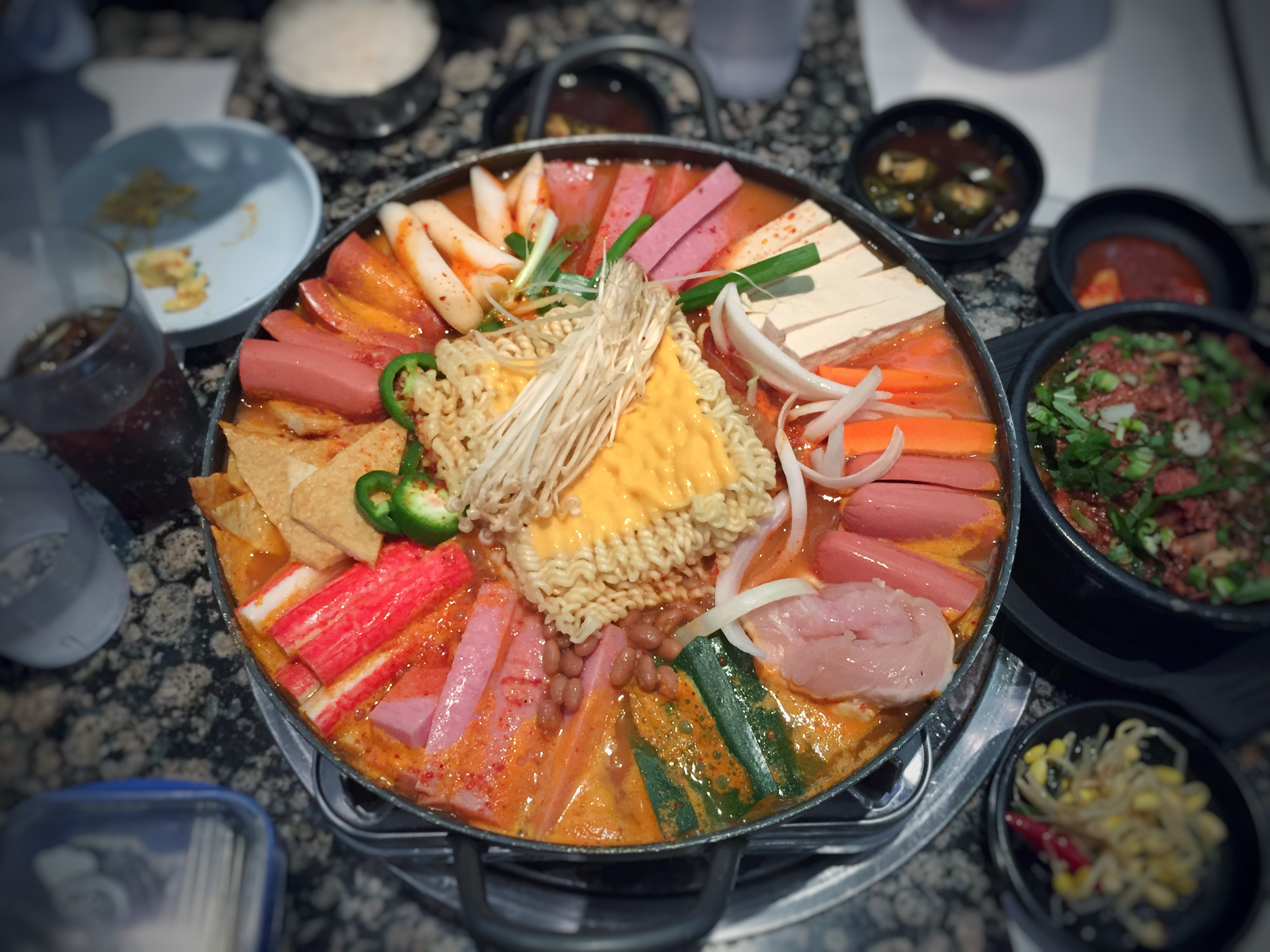
The first time you try budae jjigae, you’re overwhelmed by a number of cross-cultural smells, textures, and tastes.
The bubbling pot can include any number of things, but the usual constants are SPAM, rice cakes, kimchi, tofu, ramyeon, and hot dogs (or vienna sausages). Sometimes, there will be melted American cheese on top. It’s salty, spicy, rich, communal, and deeply comforting.
But behind one of Korea’s most beloved stews is a much more complicated history.
The name tells part of the story. Budae means military base, and jjigae means stew. The dish can trace its history back to the Korean War. Shortly after the war, South Korea was devastated, food was scarce, and communities near U.S. military bases had to make meals with whatever ingredients they could scrounge up.
In Uijeongbu, American troops had brought over tons of processed foods like ham, sausage, bacon, American cheese, and SPAM. On their own, these ingredients were unfamiliar and often too greasy or salty for Korean palates. That’s when Korean ingenuity kicked in. They mixed them with kimchi, gochujang, rice cakes, vegetables, broth, and spice. They took surplus and scarcity and transformed it into something warm, filling, and unmistakably Korean. Uijeongbu’s ingenuity lives on today, as there is even a budae jjigae street dedicated to the delicious dish.
That transformation that happened around 75 years ago is what makes budae jjigae so powerful. It’s not just a Korean stew with American ingredients. Budae jjigae is a dish shaped by war, poverty, adaptation, and resilience. SPAM, hot dogs, and American cheese became part of the dish because they were available. But budae jjigae became comfort food because Koreans made those ingredients their own.
Over time, the dish moved far beyond its origins. Today, budae jjigae is served in restaurants, cooked at home, shared late at night, and eaten around tabletop hot pots with friends and family. Modern versions often include ramyeon, mushrooms, tofu, dumplings, extra cheese, baked beans, or whatever else people want to add.
The history of budae jjigae carries memories of hunger, war, and the long shadow of U.S. military presence in Korea. But in 2026, it’s simply a nostalgic comfort food that’s spicy, hearty, flexible, and made for sharing.
Budae jjigae may have started with scarcity, but it became something much bigger: a spicy, communal, deeply Korean dish built from survival, memory, and reinvention.




Leave a Reply