
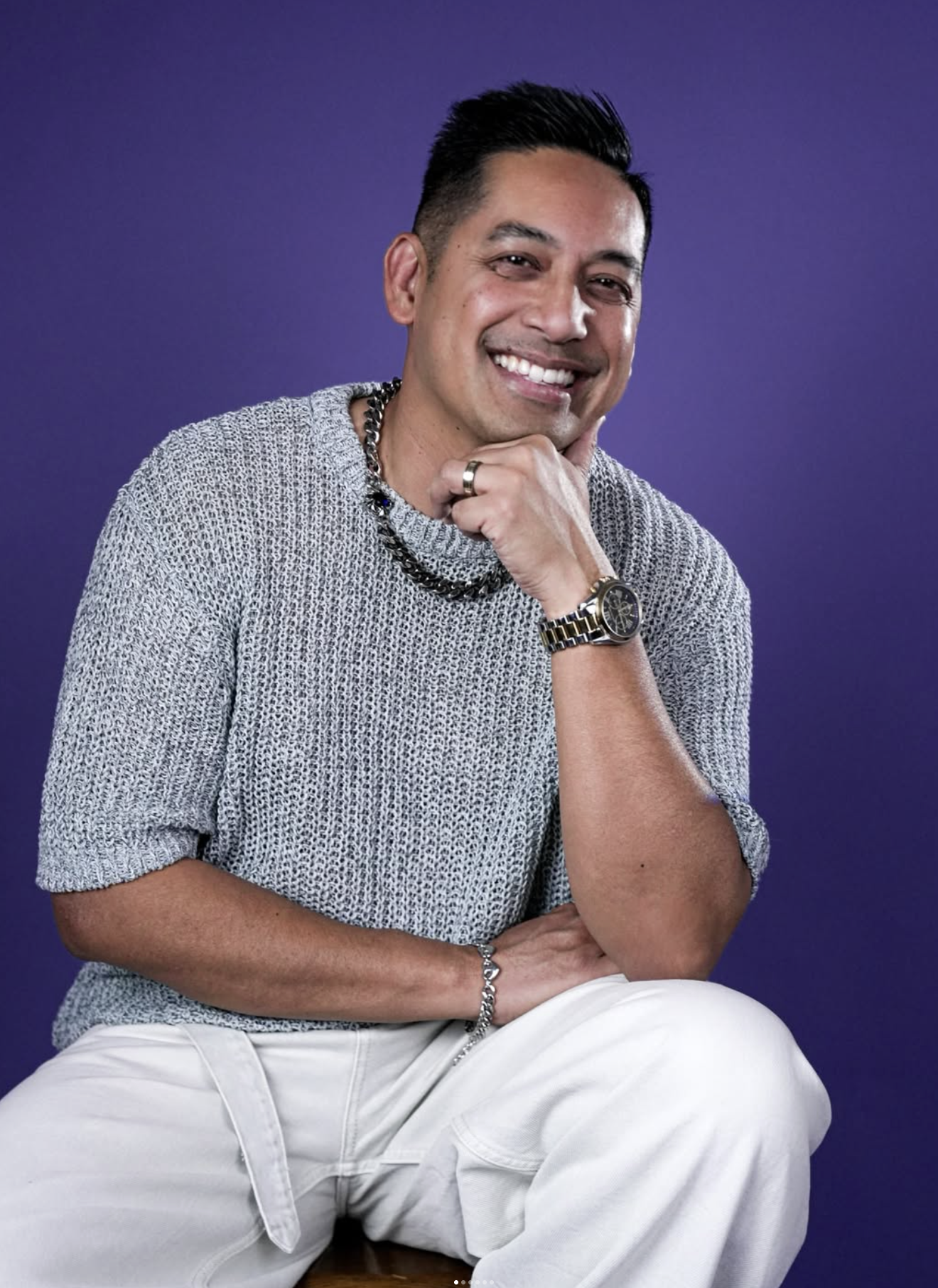
For more than 30 years, Kaba Modern has helped shape dance culture.
Dr. Arnel Calvario Ripkens started the group at UC Irvine in 1992, before dance crews had television shows, massive competitions, or millions of views online. What began through Kababayan and Pilipino Cultural Night eventually grew into a dance family that has lasted 33 seasons and reached far beyond campus.
But Kaba Modern is only one part of Arnel’s story. He’s also a pediatric occupational therapist, educator, mentor, choreographer, judge, and former President of Culture Shock LA.
We spoke with him about Kaba Modern’s Filipino American roots, what people miss when they only know the America’s Best Dance Crew era, how his work with students has shaped the way he leads, what dance competitions still need to get right, and how preparing to become a father has changed the way he thinks about family and legacy.
Let’s jump in:
K-Snax: When you founded Kaba Modern in 1992, did you have any sense that it could become part of Asian American dance history, or did it just feel like you were creating a space for your friends to dance?
Arnel: The original intention was to create a safe space where anyone interested in Hip Hop, club and/or street dance could connect, exchange, create, and express themselves. Because I grew up learning Hip Hop dance and Locking in community spaces like local park rec centers, family parties, and in my neighborhood, I was looking for a space like this at UC Irvine. When I realized it didn’t exist, I created KABA MODERN within the PACN community of UCI’s Fil-Am org KABABAYAN. I knew it was special from the start, but never would I have imagined that it would contribute to the growth of dance families across the globe.
K-Snax: Kaba Modern came out of Kababayan and Pilipino Cultural Night at UCI. What did that connection to Filipino American student culture give the crew early on?
Arnel: Through colonialism and imperialism, Filipinos have used their native dialects, music, and DANCE to hold onto their Filipinx pride and identity. I grew up witnessing both of my amazing parents doing Filipino cultural dancing and was blessed with the opportunity to learn myself through family as well. Thus, although all the Kaba Modern dancers of those founding years came from different places geographically, that reverence for dance culture and the power of music and dance to transform, heal, and express shaped Kaba Modern’s foundation of reverence for Hip Hop, street and club dance culture. I also feel that many of the Fil-am dancers grew up with dominant love languages in their households from their parents being QUALITY TIME and ACTS of SERVICE, so this also helped shape the familial culture of interdependence and teamwork ethic that continues to be so important in the ethos of Kaba Modern.
K-Snax: A lot of people discovered Kaba Modern through America’s Best Dance Crew, but the crew had already built a legacy before that. What do you think people miss when they only know the ABDC chapter?
Arnel: I am so incredibly proud of the 6 dancers who not only did so well on America’s Best Dance Crew, but also traveled across the globe for years right after where I witnessed them connect with and uplift other dancers through performances and community dance workshops. People who only know about that crew of 6 might miss the fact that Kaba Modern has had 33 seasons of dancers (each season being a dance family of 25+ dancers) with lots of accomplishments as dance competition winners, global dance educators, and also many who have found success in the dance industry as tour dancers and/or choreographers. The greatest accomplishment, however, is that we have a 33 year legacy of being FAMILY. Most of our dancers continue on staying connected as chosen family beyond the performance stage.
K-Snax: For a lot of Asian American kids, dance crews became a place to find identity, community, and confidence. Why do you think dance became such a powerful space for Asian Americans in Southern California?
Arnel: Growing up through the 70’s, 80’s, and 90’s, I really didn’t see much Asian American representation on public media beyond the limiting stereotypes of the typical martial artist or “nerd” friend character. However in the communities I grew up in (Long Beach, Cerritos, Carson, CA), I grew up seeing Asian Americans not only as doctors, engineers, and lawyers, but as world renowned B-boys/B-girls, DJs, graffiti artists and emcees. We were present as contributors to all these elements of Hip Hop, so witnessing DANCE FAMILIES exponentially grow throughout Southern CA signalled to me that Asian Americans were tired of being INVISIBLE and dance became a powerful vehicle for us to CONNECT, EMPOWER, and also EXPRESS our human stories and cultures.
K-Snax: Kaba Modern has had generations of dancers come through it. What do you think has stayed the same in the culture, and what has changed the most?
Arnel: What has stayed the same (with intentional work to keep this going) is the culture of familial care. We conduct an onboarding process for our leaders each year where we really make sure not only the operational aspects are strong, but the culture of care is strong as well. As much as we are committed to incredible artistry, we are also dedicated to the meaningful growth of all our dancers and cultivating a safe space of belonging.
I think what has changed most is that with the innovation of social media, dancers have grown accustomed to getting information and results QUICKLY. Substantial growth as a team requires a lot of long term commitment, being present, and also thoughtful care of each other. We have that in our team ecosystem, but the patience and tenacity is definitely different than in past generations.
K-Snax: You’ve also built a career in occupational therapy, including your work with Long Beach Unified. How has working with students and supporting their development shaped the way you think about dance, mentorship, and community?
Arnel: My career in occupational therapy definitely has shaped my natural intuition to look at the mind/body/spirit experience in every dance environment. It has also expanded my perception of inclusiveness and appreciation of diversity to also include appreciating neurodiversity. Thus, when I think about what our Kaba Modern culture and learning environment looks like, I know it begins with mentoring and empowering the LEADERSHIP to cultivate a culture not only of artistic excellence and Hip Hop/Street/Club dance cultural appreciation & education, but ALSO, growth mindset, of shared responsibility for accomplishing both communal and individual goals, and of appreciating and caring for each other as human beings connected through this shared journey.
K-Snax: You’ve worked across dance, occupational therapy, education, judging, and mentorship. Do those feel like separate parts of your life, or are they all part of the same mission?
Arnel: I continue to feel so honored to work with dance events such as Vibe Dance Competition, Body Rock, WDCC, and IDL and also support orgs such as Culture Shock LA, Kinjaz and Kaba Modern – all while being a pediatric occupational therapist.Although those are all different aspects of my life, they are ALL tools for me to do what means the most to me – affirming, uplifting, and supporting human beings towards accomplishing meaningful aspirations. With the state of our world today, I think it is VITAL that we use our time, talents, and heart to uplift, amplify, and empower each other, however we can.
K-Snax: You’re also entering a huge new chapter personally, expecting twins this year. How has preparing for fatherhood changed the way you think about legacy, family, and the spaces you’ve helped build?
Arnel: These last few months, I’ve had the opportunity to direct, perform, choreograph, and also judge within different dance spaces more than what has been usual for me these recent years and through each meaningful experience, I took a moment to just stop and take in the beauty of every experience and who I was sharing it with. I think this chapter approaching Fatherhood is compelling me to be more present with even deeper gratitude for every experience.
I also previously hoped that I have cultivated a legacy of love, positive impact, and purpose as an individual in the world, but being a husband to my amazing husband Dustin and now being an expecting father of beautiful twins, I’ve expanded my hopes to cultivating a life legacy that hopefully also makes my husband and future children proud of.
K-Snax: You’re now helping shape judging standards through International Dance League. After decades in the scene, what do you think dance competitions still need to get right?
Arnel: There are so many incredible dance events throughout the globe. My favorite legacy community events currently are VIBE DANCE COMPETITION and BODY ROCK because those are both community staples founded and run by dancers with integrity, intentional care and brilliant creativity. I’m also proud, obviously, of IDL as a new global offering for dancers and all the innovation it is bringing in terms of production and also providing a new viable pathway for dancers to be paid & sponsored to compete.
If there were 3 hopes for other dance competition events to do that these 3 events already do within their ethos:
1. Take time in your dance event to recognize DANCE LEADERS / DANCE ORGANIZATIONS committed to community empowerment, education, & enrichment. Our future as a global dance community depends on good leaders and impactful orgs, so we need to center, celebrate, and honor them within all dance events.
2. Contribute to and/or support at least one BIPOC or LGBTQIA+ led dance org since all the Hip Hop, street and club dance art forms in these dance events are created by BIPOC and/or queer pioneers and communities.
3. For dance competitions with GROUP dance teams competing, ensure ALL YOUR JUDGES actually care about dancers & enjoy judging. It is extremely disheartening to judge alongside people who appear to be there for the optics more than serving dancers. Also, make sure your judges have revered experience directing and/or choreographing for dance GROUPS. Just because an individual has a lot of followers or happens to be a brilliant individual dancer, doesn’t mean they are qualified to judge group dance competitions.
K-Snax: Since we’re K-Snax, we have to ask: what are your favorite Asian snacks?
Arnel: My favorite Asian snack is definitely HALO HALO – especially when it has a scoop of Ube Ice cream on top! SARAP!!!
Follow Dr. Arnel Calvario Ripkens:

Leave a Reply