
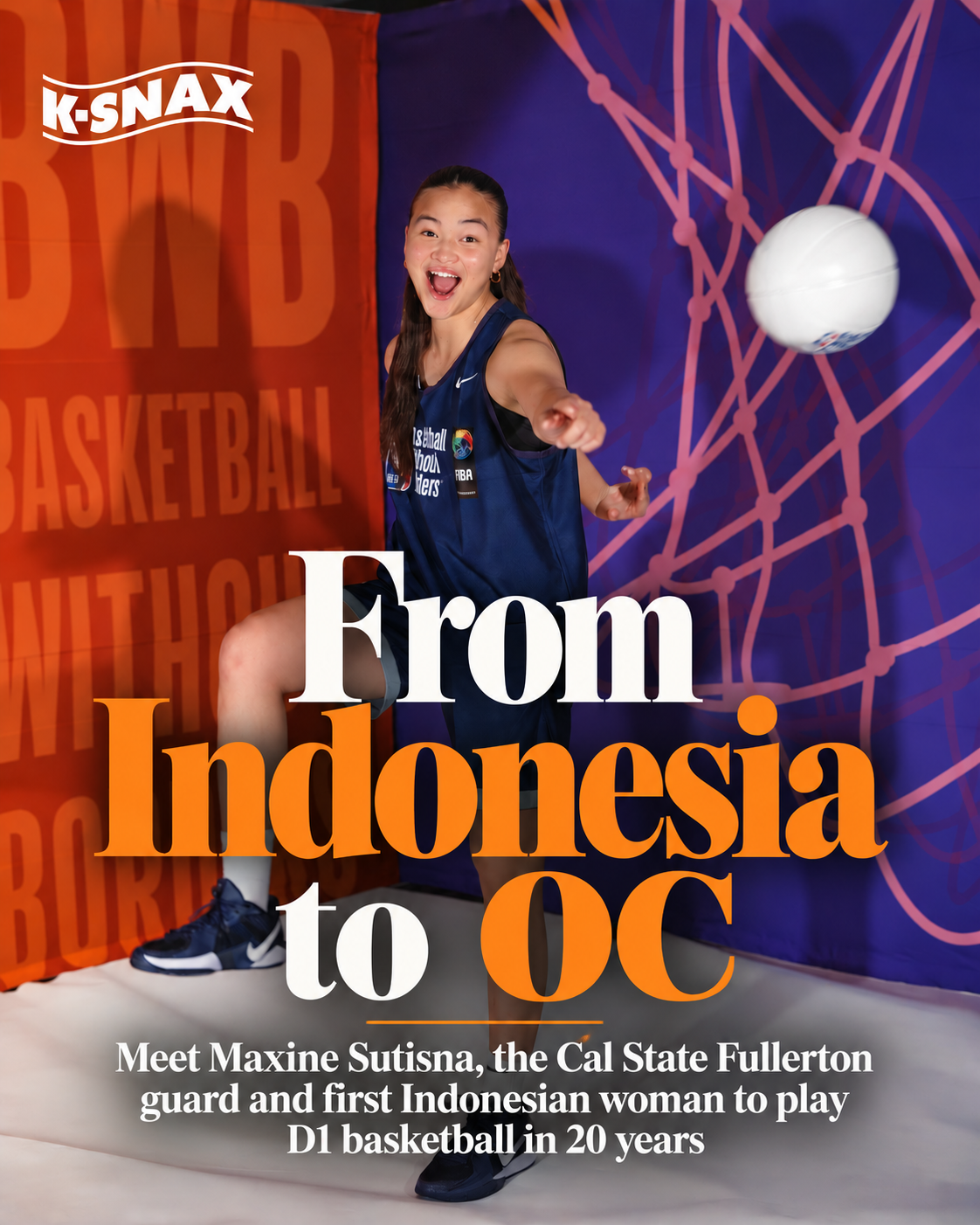
Maxine Sutisna’s path to Division I basketball started thousands of miles from Cal State Fullerton.
The Indonesian guard moved from Indonesia to California to pursue the game at a higher level, adjusting to a completely new style of basketball and a life in a foreign country. Since then, she’s represented Indonesia internationally, became the first Indonesian woman to play Division 1 basketball in 20 years when she suited up for Fullerton last season, and worked her way through a lengthy rehab after breaking her fifth metatarsal this summer.
We spoke with Sutisna about making the move to the U.S., what representing Indonesia means to her, what she learned from her first year of Division I basketball, and why she hopes her journey can help more young Indonesian and Asian players see a path for themselves in the sport.
Let’s jump in:
You moved from Indonesia to California to pursue basketball. What gave you the confidence to make that move, and what was the hardest part of adjusting to life in the U.S.?
The confidence to make this move came from the support of my family, especially my parents. They played a huge role in reassuring me, preparing me for the transition, helping me make plans, and supporting me throughout the process. The hardest part was finding a new routine and learning how to live independently. Moving to a different country meant adjusting to a new environment while managing my responsibilities on my own.
How different is basketball in the U.S. from what you were used to playing in Indonesia, both stylistically and culturally?
Culturally, basketball in the U.S. is very different from what I was used to in Indonesia. Here, basketball is more than just a sport; for many players, it is an opportunity to earn an education and create a future for themselves. I noticed a different level of hunger, intensity, and commitment among players. The mentality here is that opportunities have to be earned through hard work, and that has influenced the way I approach the game and my development as a player.
Has your relationship with your Indonesian identity changed since moving to the U.S.?
I don’t think my Indonesian identity has changed. I’ve always been the same person, and the values I grew up with in Indonesia continue to guide me every day. They remind me of where I come from and help keep me grounded, even as I grow and experience new opportunities in the U.S. However, moving to the U.S. has changed the way I view basketball and helped me discover how strong and independent I can be.
You’ve represented Indonesia internationally for years. What does putting on the Indonesian jersey mean to you?
It means the world to me. Knowing that my country trusts me to represent Indonesia is an incredible honor. Every time I put on the jersey, I carry a sense of pride and responsibility with me. I’m not just representing myself; I’m representing my family, my country, and everyone who has supported me throughout my journey. I never take that opportunity for granted.
Indonesia has such a passionate basketball community, but relatively few players have made the jump to NCAA Division I. What do you think could help more Indonesian players get opportunities in the U.S.?
I think it starts with hard work, consistent training, and developing the ability to compete at a high intensity. Players need to challenge themselves and be willing to step outside their comfort zones to continue growing. The right community also matters. Surrounding yourself with people who support your academic and athletic development can make a huge difference. I would also encourage young players to reach out to those who have already taken this path, learn from their experiences, and build connections that can help them navigate the process.
What did your freshman season at Cal State Fullerton teach you about what it takes to succeed at the Division I level?
My freshman season taught me that hard work never goes unnoticed, even when no one is watching. The effort you put in behind the scenes will eventually show when you get your opportunity. I also learned that succeeding at the Division I level requires mental toughness and consistency. Not every day is going to be a good day, but how you respond to challenges and setbacks says a lot about who you are as a player. It’s important to stay disciplined, trust the process, and not let difficult days define your progress.
You’ve shared parts of your rehab journey on Instagram. Can you take us through what happened and what the recovery process has been like for you?
I broke my fifth metatarsal this summer while playing basketball after landing on someone’s foot. I spent about three months in a walking boot, and the recovery process involved several stages. For the first month and a half, I was non-weight-bearing. During the second month, I gradually progressed to using one crutch, and after about two and a half months, I started learning how to walk again with the boot.
When I returned to school in August, I was able to take the boot off and begin the next stage of my recovery. I’m currently still working through rehab, focusing on regaining my strength, mobility, and confidence. This process has taught me a lot about patience, resilience, trust, and being honest about my body’s recovery. As an athlete, it’s not always easy to sit out and watch, but I’m focused on doing everything I can to come back stronger. My goal is to be ready for preseason and, definitely, conference play.
Who were some of your favorite basketball players growing up, and what did you admire about their games? Were there any Asian players you especially looked up to?
Growing up, two of my favorite players were Sue Bird and Diana Taurasi. I loved how aggressively they played and how high their basketball IQ was. Diana Taurasi is an elite shooter, and her mid-range fadeaway is one of my favorite moves to watch. Sue Bird was an incredible point guard who always seemed to know where Diana would be on the court. Their chemistry and ability to play off each other were amazing to watch.
More recently, Paige Bueckers has become one of my favorite players because of her shooting ability and versatility as a combo guard.
As for Asian players, I definitely look up to Tanaka. I’ve played against her before, so seeing her now competing in the WNBA is incredible. Her shooting ability and quickness are so impressive, and it’s inspiring to see an Asian player performing at that level.
Knowing that younger Indonesian and Asian players can now look at you playing Division I basketball, do you feel any responsibility to show them what’s possible?
Absolutely. Every day, I’m reminded that I’m not just playing for myself or my own future, but also for the next generation of young Indonesian and Asian women. I want them to see that it’s possible to pursue their dreams, even if the path isn’t always easy or familiar. If my journey can inspire even one young girl to believe in herself and work toward playing basketball at a higher level, then that means a lot to me. That’s my “why” and what motivates me to keep pushing forward.
When you look ahead over the next few years, what do you want to accomplish at Fullerton, with Indonesia, and eventually in basketball beyond college?
At Cal State Fullerton, one of my biggest goals is to make it to the Big West finals and continue growing as both a player and a student-athlete. With Indonesia, I hope to represent my country in major international competitions like the SEA Games and Asian Games. Beyond college, my dream is to play professionally overseas and, if the opportunity comes, in the WNBA. Ultimately, I want to keep challenging myself, represent Indonesia at the highest level possible, and continue opening doors for the next generation of Indonesian and Asian women in basketball.

Leave a Reply