
Clarissa Wei has long been one of our favorite food writers. We first learned about Wei in 2015, when she was one of Jonathan Gold’s food scouts. Gold’s restaurant recommendations were the basis of our restaurant bucket list throughout the 2010s, and his documentary City of Gold is incredible.
More than a decade later, Wei is an accomplished cookbook author. Her first cookbook, Made in Taiwan, earned the 2024 IACP Julia Child First Book Award. Also, it was a finalist for the 2024 James Beard Award for Best International Cookbook. Her next book, Sitting the Month, comes out on September 15 and focuses on postpartum confinement, a centuries-old tradition. Inspired in part by Wei’s own experience after becoming a mother, the book looks at the foods, beliefs, and modern postpartum care centers that shape the practice today.
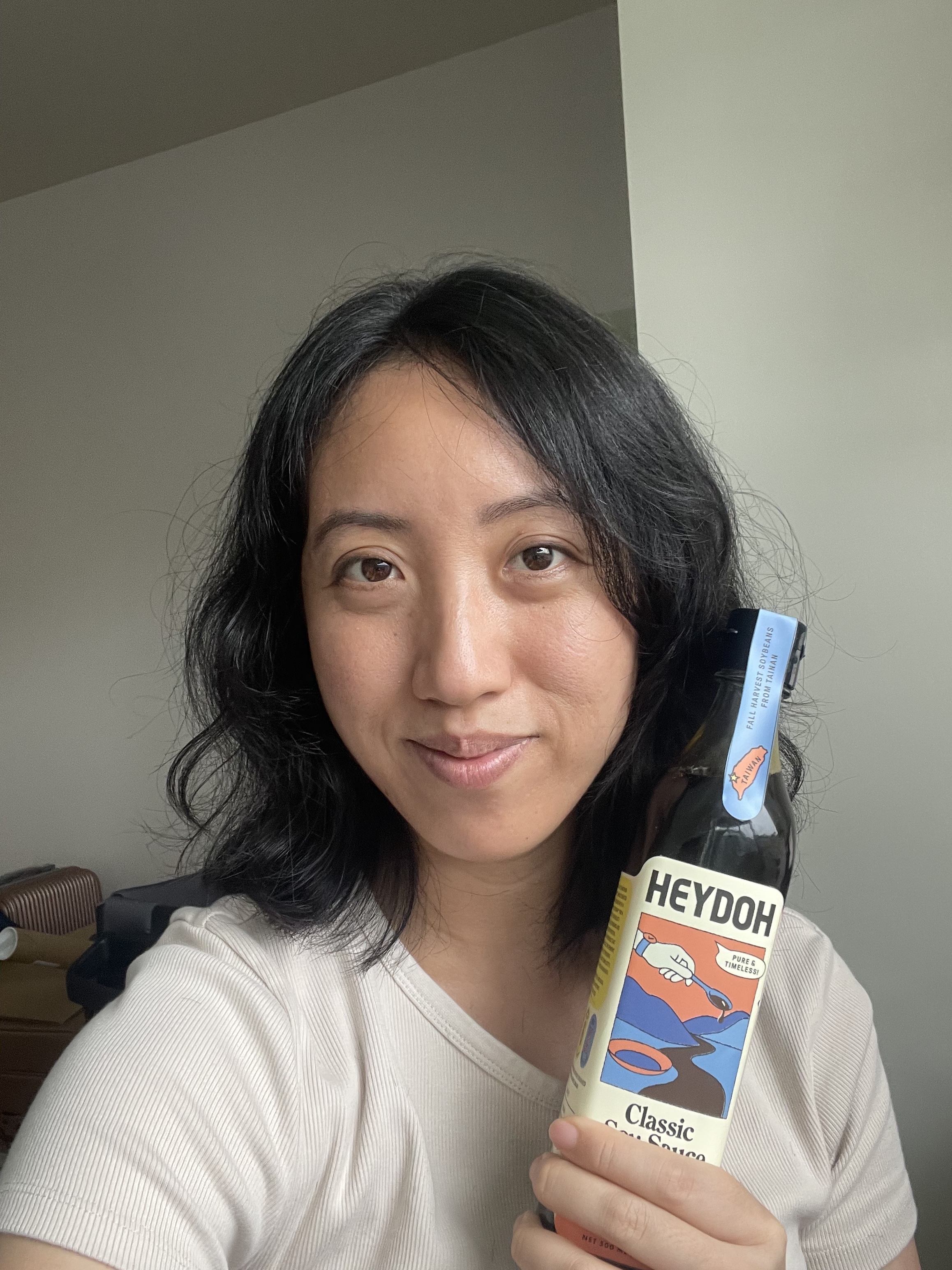
Wei has also moved into CPG as the co-founder of HEYDOH, a brand built around Taiwanese black soybean soy sauce. The company wants to change how American consumers think about soy sauce, from an everyday pantry staple to something that’s “so good you can sip.”
We talked with Wei about Sitting the Month, what makes a soy sauce exceptional, building HEYDOH, and Taiwanese cuisine. Let’s jump in:
K-Snax: Your career has taken you from journalist to cookbook author to entrepreneur. Looking back, what’s the common thread that ties everything you’ve built together?
Wei: My common thread has been showing Americans what life, culture, and food in modern Asia actually looks like. Many people in the diaspora have a romanticized idea of the motherland because their perception is shaped by family stories, their parents’ memories, or brief annual visits. Often, that image is frozen in time. I’ve been spending significant time in East Asia since 2015—first in months-long stretches, and then full-time after moving there in 2018. A lot has changed. Through my journalism, I show readers what contemporary life in Taiwan is like. Made in Taiwan is a portrait of modern Taiwan through its food and politics. Sitting the Month explores confinement foods through the lens of Taiwan’s hypermodern postpartum centers. And with HEYDOH, I’m taking Taiwan’s centuries-old tradition of black soybean soy sauce and reframing it as a modern product. They’re different projects, but they all explore how tradition fits into how people in Asia actually live today.
K-Snax: Sitting the Month comes out next month. Why did this feel like the story you needed to tell after Made in Taiwan?
Wei: Growing up, I understood confinement as an antiquated tradition where new mothers ate pork trotters and soups filled with rice wine and weren’t allowed to wash their hair. But very few mothers in Taiwan practice it that way today. Instead, the vast majority check into these glitzy postpartum hotels, where they’re served a parade of herbal soups and follow meal plans created by nutritionists and Chinese medicine doctors. As with Made in Taiwan, I wanted to give people a snapshot of what life in modern Taiwan is actually like. It’s a highly specific subject, but it opens onto much bigger questions about motherhood, modern medicine, and how an old custom is constantly being reinterpreted.
K-Snax: You’ve written that becoming a mother inspired this book, but you also experienced postpartum anxiety during your first confinement stay. How did that experience shape the book you ultimately wanted to write?
Wei: A lot of my anxiety came from nurses giving me things to eat or advice to follow without ever explaining why. My unpopular opinion is that ancient Asian wisdom isn’t always automatically best. Through my research, I learned that some physicians in ancient China gave pregnant women pills made from their husbands’ pubic hair mixed with cinnabar paste to ease labour. For uterine prolapse, they prescribed salves made from tortoise blood and, in some cases, rat poop. The point is that we need to question the why instead of assuming something must be good simply because our ancestors did it hundreds of years ago. I wrote my cookbook to demystify.
K-Snax: You’ve spent years writing about Taiwanese food and the people who make it special. What led you from telling those stories to launching a food brand of your own?
Wei: My writing offers a very specific portrait of modern life in Taiwan and is intended for people who already have an interest in Taiwanese culture, food and cooking. HEYDOH, on the other hand, is designed for customers who may not know much about Taiwan—or even ever care. It may seem like a 180 from my writing, but that was a deliberate business decision. To build a CPG brand that can scale and succeed, you have to reach beyond an existing niche. Our goal is to disrupt the soy sauce industry in America and redefine what premium soy sauce means and what it looks like. We’re not the first or only company to sell single-origin black soybean soy sauce, but our ambition is to be the first to bring it to major American grocery-store shelves. We want to elevate soy sauce to the same cult-like status that olive oil or coffee has achieved in the US and create a fresh experience through the packaging, identity, and how the product fits into people’s everyday lives. Example: we deliberately did not use any red in our branding. That was in my design brief. Red is often used as visual shorthand for Asian food, tradition and nostalgia, and I wanted HEYDOH to have an identity that felt different and contemporary.
K-Snax: Soy sauce is such a familiar pantry staple that many people rarely stop to think about how it’s made. How can you tell if a soy sauce is exceptional?
Wei: Love this question. It’s actually easier than you might think. One of the clearest objective measures is total nitrogen, sometimes called the fermentation index. It reflects how thoroughly the soybean proteins have broken down during fermentation: generally, the higher the number, the greater the concentration of naturally occurring amino acids that contribute umami, aroma and depth. Standards vary across East Asia. In Taiwan, a total nitrogen level of 1.4 qualifies as Grade A, while in Japan, 1.5 is the benchmark. HEYDOH Classic has a total nitrogen level of 2.07, well above both standards. For context, many premium soy sauces fall somewhere around 1.4 to 1.7. So when we call our soy sauce premium, we’re not simply using a marketing buzzword. Every batch is tested before it leaves Taiwan. Of course, numbers aren’t everything. We mostly just have our customers taste our soy sauces straight and compare them to whatever else they have lying in their pantry. It’s noticeable. That’s why we trademarked our slogan “so good you can sip.”
K-Snax: Which Taiwanese dishes do you believe deserve far more attention outside Taiwan?
Wei: Braised pork rice. The best versions are incredibly simple: diced pork belly simmered with high-quality soy sauce, sugar, garlic and shallots, then spooned over rice. Because there are so few ingredients, the dish really comes down to the quality of the soy sauce.
K-Snax: Years ago, you mentioned A&J Restaurant as one of your favorite places to eat in Arcadia, and their Irvine location has long been one of our favorites. Are there any restaurants or meals from California that you still find yourself thinking about while living in Taiwan?
Wei: It sounds cliche as a Californian, but I miss a good salad.
K-Snax: Because we’re K-Snax, we have to ask: what are your favorite Asian snacks?
Wei: I’m a sucker for shrimp chips. Completely underrated.
Follow Clarissa Wei:
Follow HEYDOH:



Leave a Reply