
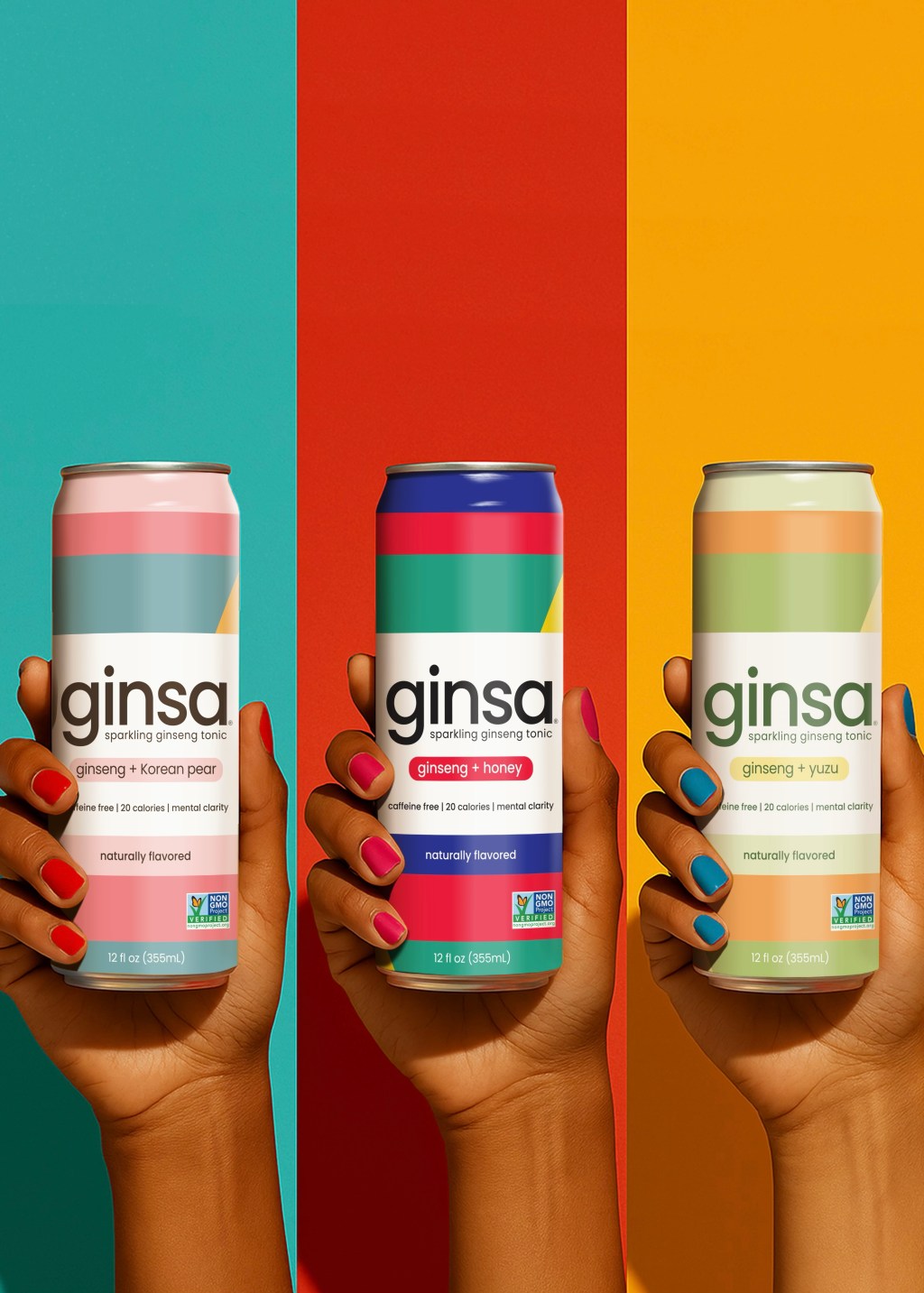
For decades, Korean ginseng has been a part of Juliet Kim Blake’s daily life. Now she’s working to make it a part of people’s daily lives in the US as the founder of ginsa.
This journey started when she visited Seoul in the winter of 2022, she noticed that ginseng stores were all selling ginseng in the same form factor: premium extracts, potions, and elixirs in pouches.
When she returned home, a deep dive into TikTok and Instagram showed her something else. She saw that people were curious about Korean ginseng, pulled in by its reputation in Korea. However, Korean ginseng simply wasn’t accessible for the general American consumer. That gap became the starting point for ginsa, a brand built around the idea that tradition survives when it evolves. In our interview with her, Blake shares what she saw in Seoul, why she believes Asian flavors shouldn’t be treated as “niche,” what it’s really like to demo a new brand at Costco, and how she’s building ginsa with focus, flexibility, and a long-game mindset.

Let’s jump into the interview:
K-Snax: You’ve said Korean red ginseng has been part of your daily life for decades, and you wanted to bring it into the modern day. When was the moment you knew you had to build ginsa?
Blake: I don’t think it was necessarily one aha moment. What really set everything off though was a trip back to S. Korea in the winter of 2022. I would be walking around Seoul and noticing just how many ginseng stores were around. You would see one sandwiched between several coffee shops on every street. But they were all almost identical in their product offerings: premium, high end Korean ginseng extracts, medicinal potions, elixirs in pouches. They were all very luxurious and hardly accessible.
When I came back, I went down a crazy TikTok and Instagram rabbit hole searching for any and all content of Korean ginseng. What I found was that there were so many reaction videos of creators trying Korean red ginseng on camera. Now, if you’ve ever tried ginseng in its pure extract form, which is generally how it’s offered, you’ll understand why most of the reactions involved some pretty dramatic responses and the funniest faces ever. It is not palatable by any means.
This showed me that there were people out there who want to try and it and want to love it. Maybe it’s because they know ginseng is so good for you, or maybe they’re K-culture fans and have seen characters in their favorite K-dramas casually downing a stick of ginseng. But they just can’t handle the taste and texture. I’m a big believer that in order to preserve tradition, you need to continue to evolve them to make them relevant to today. So ginsa was born. We didn’t create Korean ginseng, but we did modernize it to bring it to the masses in a deliciously accessible format so you can get all the benefits with none of the bitter bite.
K-Snax: On your website, you mention the underrepresentation of Asian ingredients/flavors in your space, which really resonates with us. What did you feel the market was missing, and what did you refuse to compromise on when building ginsa?
Blake: Let’s be honest. People love Asian cuisine. But what I felt was missing was its everyday presence. Asian flavors were, and still are, often treated as something niche that you only experience when eating at an Asian restaurant or shopping at an Asian market or buying Asian products from Asia. I didn’t like that these beautiful and culturally rich flavors weren’t part of the mainstream daily ritual in the same way say lemon or fruit punch or berries are.
Ginseng is actually far more familiar than people realize. It’s in countless beverages, particularly energy drinks, often positioned as a functional add-on rather than the star. In fact, most beverages don’t even declare the dosage of ginseng and they bundle it with caffeine to help justify its presence. This is just not necessary. Ginseng does not need caffeine to work. It has its own naturally balancing and energizing properties and is known as “The Root of Life” for a reason. For me, I felt that ginseng finally deserved its own space to shine as the hero.
K-Snax: What has the demo’ing process at Costco been like for you and ginsa?
Blake: Grueling! But genuinely so worth it. If we’re being real, Costco is the big leagues. Launching with them has been one of the most exciting and by far the most intimidating experience to date. You’re effectively introducing your brand to 5,000 to 10,000 people every week and asking them to commit to not just a can, but an entire case. Those people can just as easily become your biggest fans or your toughest critics. In reality, just like with anything in life, it’s been both. That said, it’s been incredibly rewarding. We’ve met so many new ginsa friends and seeing customers actively seek us out at the next roadshow to restock has been deeply validating and humbling. There’s nothing quite like watching a first sip turn into a genuine connection in real time.
K-Snax: What have been the most difficult challenges you’ve faced while running ginsa?
Blake: We face the same challenges as any other early-stage CPG brand faces, but they feel especially amplified when you’re new. Review delays, buyer changes, shifting timelines all have a ripple effect that leads to missed revenue forecasts. As a young brand, these reviews are Without broad distribution elsewhere, you don’t have multiple channels yet to balance missed new distribution with increased velocities.
That’s the most challenging part: the uncertainty. When revenue gets pushed, the bills don’t. Balancing cash flow, priorities, and long-term strategy while staying flexible has a required a constant amount of zigging and zagging. It truly has been an incredible exercise in resilience and learning how to adapt quickly without losing focus on the bigger picture. But if you’re a bit of a weirdo like me, you enjoy the discomfort and almost feel more at peace with the chaos than operating in a comfortable routine.
K-Snax: A big barrier is that ginseng can taste bitter/medicinal. What did it take to get to a flavor profile that feels refreshing and daily-drinkable (and not like a supplement)?
Blake: Yes, you are correct! Ginseng absolutely has that reputation and that’s really the reason for why ginsa exists. During our R&D phase, I spent a long time researching and testing different sources to find a Korean ginseng that delivered on both flavor and function. I landed on a renowned South Korean partner with a patented fermented ginseng. Through fermentation and hydrolysis, the ginseng is already broken down, which makes it significantly more bioavailable
K-Snax: With 20+ years in beverage and now building your own company, how has your past experience helped you in building ginsa?
Blake: It’s helped me shortcut a lot of the typical startup learning curve. I’m fortunate I can say that I’ve made the mistakes already on other people’s dimes working at some of the most successful brands in the industry. I’m much clearer on what to do, where not to spend money, which shortcuts are false economies, and what truly moves the needle vs. what’s just noise. There’s so much advice about building CPG brands, but experience helps to filter that really quickly. I also understand that this is a slow intentional build. I know how the retail system actually works, how long things take, and where flexibility is required. That perspective gives me the confidence to know when and how to pivot when something doesn’t pan out without reacting emotionally or losing sight of our long-term strategy.
K-Snax: What’s your favorite Asian snack?
Blake: Noooo! Please don’t make me choose just one. I’m a sucker for Songpyeon which is a Korean rice cake that comes in little half moon shapes. They’re typically filled with sesame seeds mixed with honey, red bean or chestnuts. The combination of the soft chewiness with the sweet filling is dangerous!
Follow ginsa:

 K-Snax
Leave a comment